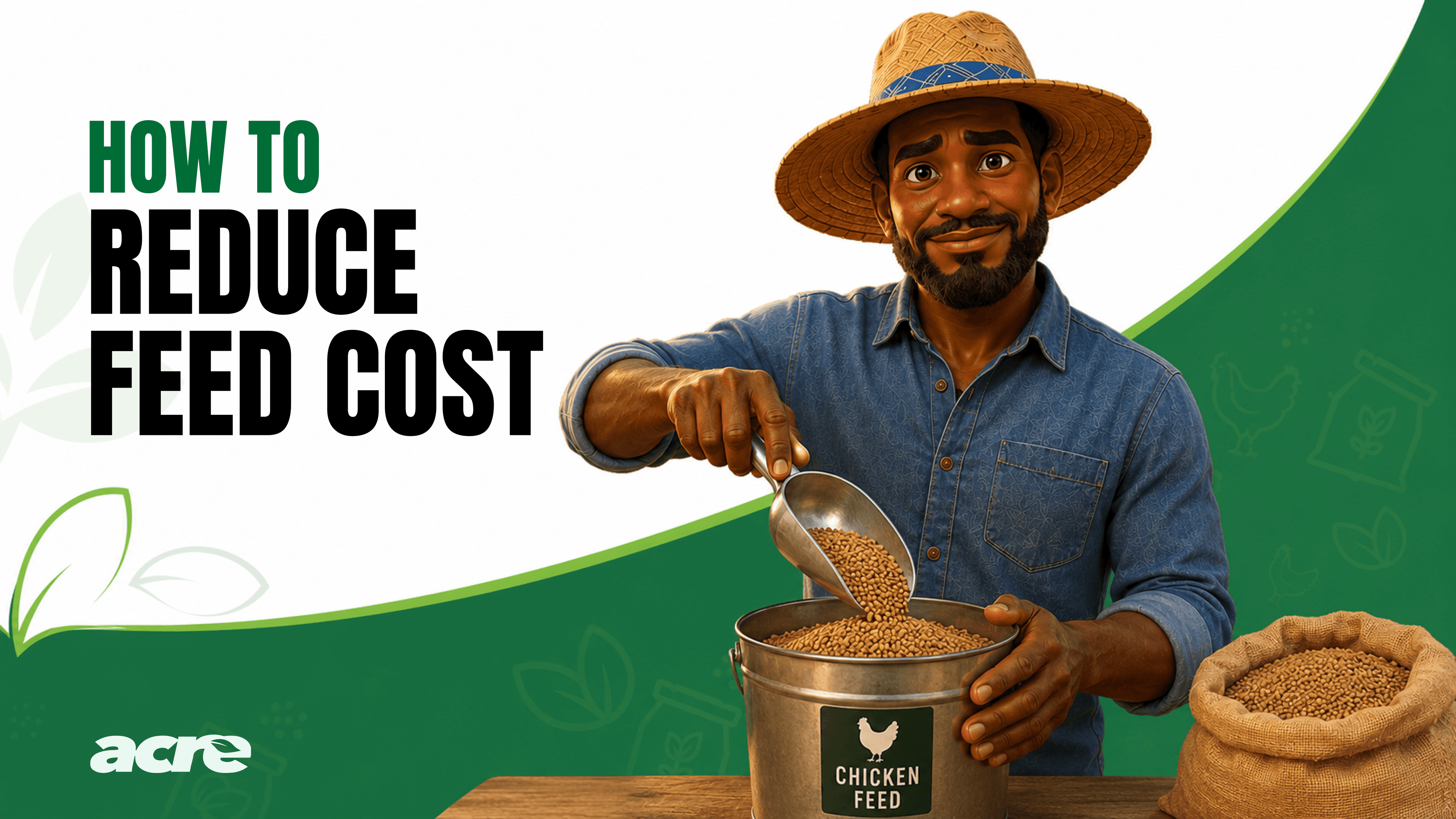
Feed is one of the biggest costs in livestock farming. Learn practical
Feed can quietly become the biggest expense on a livestock farm.
You buy feed today. Then again next week. Then again next month.
Before you know it, a large part of your farm income is going straight back into feeding your animals.
The solution isn't simply to buy cheaper feed.
Cheap feed that slows growth, increases disease risk, or takes longer to get animals to market can actually cost you more in the long run.
The real goal is to get more value from every naira spent on feed.
Here are practical ways to do it.
**1. Know How Much Feed Your Animals Actually Consume ** Many farmers know how much feed they buy but don't know how much their animals actually consume.
For example, if you buy 10 bags of feed but don't track daily usage, it becomes difficult to know whether the feed is being used efficiently or wasted.
Start recording:
Quantity of feed purchased Date purchased Quantity given to animals Number of animals being fed Feed remaining
This simple information can help you identify unusual consumption and unnecessary waste.
You cannot reduce a cost you don't measure.
2. Reduce Feed Wastage
Sometimes the problem isn't the price of feed.
It's how much is being wasted.
Feed can be lost through:
Spillage Poorly designed feeders Overfeeding Wet or contaminated feed Poor storage Rodents and pests
Check your feeding equipment regularly.
If animals are constantly throwing feed out of the feeder, you're paying for food that isn't reaching the animals.
Small reductions in wastage can make a noticeable difference over time.
3. Store Feed Properly
Buying feed in bulk may reduce the price per bag, but poor storage can turn that saving into a loss.
Feed should be protected from:
Rain Moisture Pests Rodents Excessive heat Contamination
Keep feed in a clean, dry and well-ventilated area and avoid placing bags directly on the floor where possible.
Remember:
Spoiled feed is money wasted.
4. Don't Feed Every Animal the Same Way
Different animals have different nutritional requirements.
A young animal growing rapidly does not have the same needs as a mature animal.
Likewise, animals being raised for meat may have different feeding requirements from breeding animals.
Your feeding strategy should consider:
Age Weight Breed Growth stage Production purpose Health condition
Giving every animal the same amount of feed simply because they are on the same farm can lead to unnecessary costs.
5. Buy Based on Planning, Not Panic
One common mistake is buying feed only when you're almost out.
When you're under pressure, you may have fewer options to compare prices or negotiate with suppliers.
Instead, monitor your feed usage and estimate when you'll need your next supply.
This allows you to:
Compare suppliers Plan purchases Take advantage of legitimate bulk discounts Avoid emergency purchases
Good farm records make this much easier.
6. Track Feed Cost Per Animal
This is one of the most important numbers a livestock farmer can understand.
Don't only ask:
"How much did I spend on feed?"
Ask:
"How much did I spend feeding each animal?"
For example, if you spent ₦500,000 on feed for 100 animals, your average feed cost is ₦5,000 per animal.
Tracking this over time helps you understand whether your feeding costs are increasing or decreasing.
It also helps you compare different batches and identify problems early.
7. Don't Sacrifice Quality Just to Save Money
This is where many farmers get it wrong.
Choosing the cheapest feed isn't always the best way to reduce costs.
If poor-quality feed causes slow growth, poor egg production, higher mortality, or longer production cycles, your overall cost can increase.
Think about cost per result, not just cost per bag.
The better question is:
"Which feeding option gives me the best return for every naira I spend?" ** 8. Keep Records of Your Feed Expenses**
This is where proper farm record keeping becomes extremely useful.
Record:
Date of purchase Type of feed Quantity purchased Price per bag Supplier Amount used Animals fed Remaining stock
After a few weeks, you will start seeing patterns.
You may discover that feed prices have increased.
You may notice that one batch consumes more feed than another.
Or you may realize that a significant amount of feed is being wasted.
Without records, these problems are easy to miss.
9. Review Your Numbers Every Week
You don't need to spend hours analysing your farm.
Set aside 10–15 minutes each week.
Ask:
How much feed did I buy?
How much did I use?
How many animals am I feeding?
How much did I spend?
Is consumption increasing?
Are the animals growing or producing as expected?
These simple questions can help you catch problems before they become expensive.
The Goal Isn't to Spend Less. It's to Waste Less.
Reducing feed costs doesn't mean starving animals or always choosing the cheapest feed.
It means managing your feeding system better.
When you know what you're buying, what you're using, what you're wasting, and what you're getting in return, you can make much better decisions.
And that's why farm records matter.
Your feed expenses are telling a story.
You just need the right records to read it.
Start Tracking Your Farm Better
Your farm doesn't have to be complicated to manage with data.
With Acre, livestock farmers can keep important farm records in one place, making it easier to track expenses, monitor farm activities, and understand how their farm is performing.
Because when you know your numbers, you can make better farming decisions.